


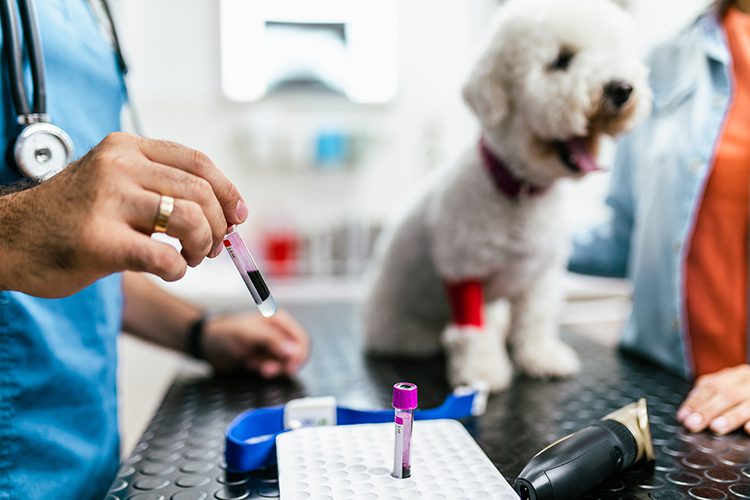
A physical exam tells us a great deal. Sometimes we need more information from inside the body. Laboratory testing and veterinary radiology can help Brook Farm evaluate illness, injury, organ function, and changes that are not visible from the outside.
Diagnostics should answer a useful question
Testing is most helpful when we know what decision it may change. Before recommending a test, we will explain what we are looking for, what the result may tell us, and whether other steps could still be needed.
Veterinary laboratory testing
Depending on the concern, laboratory testing may use blood, urine, stool, skin, ear, or other samples. These tests can help evaluate patterns associated with infection, anemia, dehydration, inflammation, parasites, and changes in organ function. They may also help establish a healthy baseline, monitor a known condition, or support decisions before anesthesia.
Some tests may be completed on site. Others may be sent to a reference laboratory or pathologist for broader analysis or specialist interpretation. Turnaround time depends on the sample and test. We will tell you when to expect results and how we will share them.
Digital X-rays and veterinary radiology
X-rays can help us look at bones, joints, the chest, the abdomen, and other areas when the exam alone cannot show enough. They may be recommended after an injury, for coughing or breathing changes, for abdominal symptoms, for mobility concerns, or when a swallowed object or other internal problem is possible.
Good images depend on careful positioning. Some pets can stay still with patient handling; others may need sedation to reduce stress, prevent discomfort, and obtain images that can be interpreted. We will discuss this with you before proceeding.
What happens when your pet needs diagnostics
- We begin with the history and physical exam.
- We identify the question the test or image is meant to answer.
- We review the recommended next step and expected cost whenever circumstances allow.
- We collect the sample or obtain the images with attention to comfort and safety.
- We explain the results, what they mean in context, and what happens next.
One result rarely tells the whole story
A laboratory value or X-ray finding is interpreted alongside the exam, symptoms, history, and sometimes additional testing. A normal result can still be useful, but it does not rule out every condition. If the picture remains unclear, we will explain whether monitoring, repeat testing, outside review, ultrasound, or specialty referral may help.
.jpg)